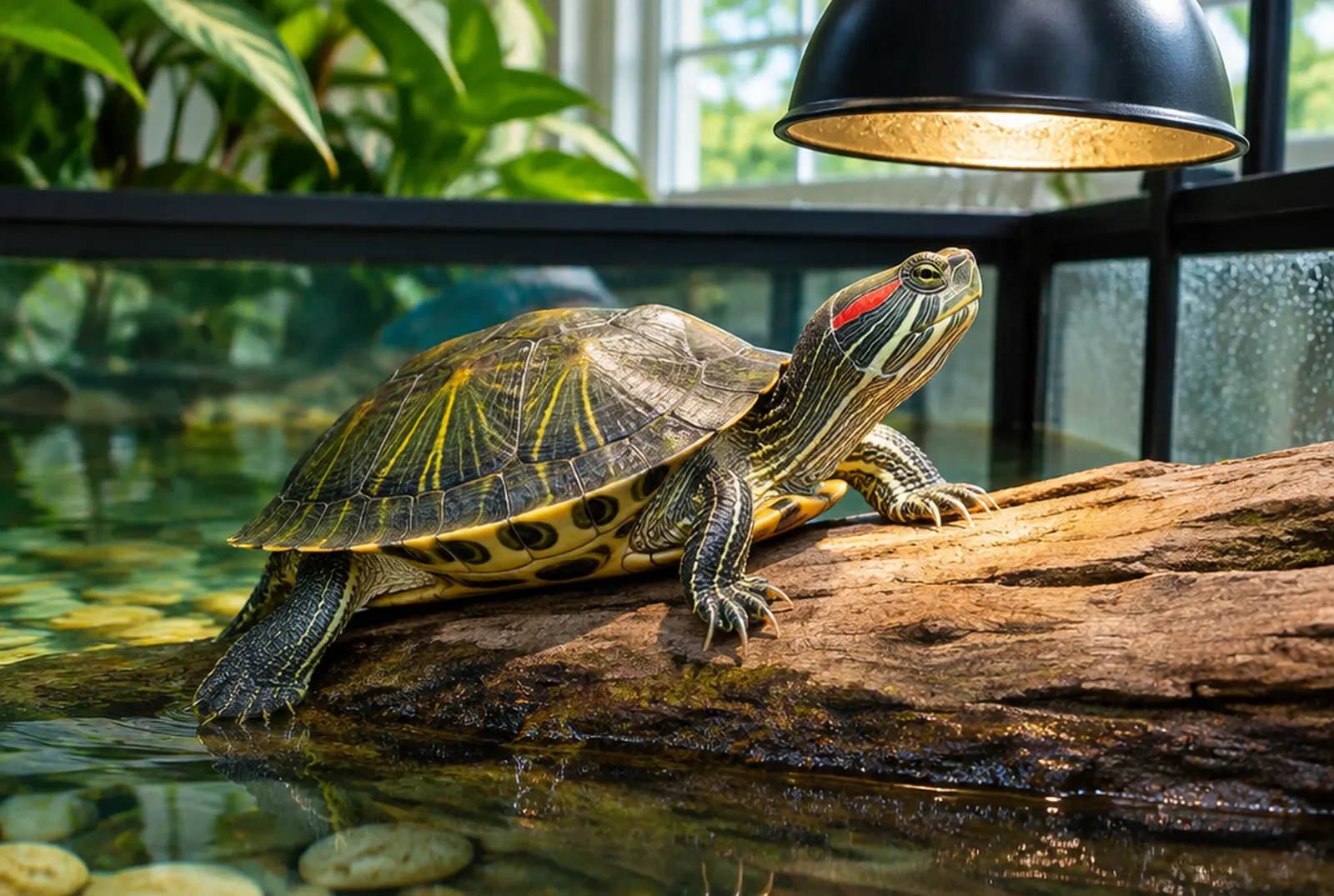
Check the law first. In the EU, Trachemys scripta (red-eared, yellow-bellied and Cumberland sliders) has been on the list of invasive alien species of Union concern since 2016, so import, sale and breeding are banned. Existing pets may be kept for life in secure conditions where they can't breed or escape. In the US, selling turtles with shells under 4 inches as pets is banned. Never release a turtle: released sliders are one of the world's most widespread invasive species. If you want a slider, adopt from a rescue.
Is a red-eared slider right for you?
Red-eared sliders (Trachemys scripta elegans) are native to the south-central United States and northeastern Mexico, living in ponds, lakes, swamps and slow rivers. They're active, bold and interactive, and will learn to recognize the person who feeds them.
They are not low-maintenance. Adults need a very large tank or indoor pond, powerful filtration, heating, UVB and regular water changes. They also live for decades.
Tank size
The standard rule is at least 10 gallons of water per inch of shell length:
| Shell length | Minimum water volume |
|---|---|
| 4 in juvenile | 40 gallons |
| 7–9 in adult male | 70–90 gallons |
| 10–12 in adult female | 100–120+ gallons |
Many keepers go larger, using stock tanks, large turtle tubs or indoor ponds, which are often cheaper per gallon than glass aquariums. Water depth should be at least 1.5–2 times the turtle's shell length so it can flip over if it ends up on its back.
Basking area
Sliders need a dry basking area they can climb onto completely and dry off: a floating dock, a sturdy above-tank platform, or a ramp to a dry shelf.
- Basking surface: 95–104°F (35–40°C)
- Basking air: 85–90°F (29–32°C)
Use a halogen basking bulb over the dock, on a thermostat or dimmer, out of splash range.
Water temperature
- Hatchlings (under 1 year): 78–82°F (26–28°C)
- Adults: 74–78°F (23–26°C)
Use a submersible aquarium heater with a guard (turtles can break exposed heaters), and check with a separate thermometer.
UVB lighting
UVB is essential for calcium use and shell health. Use a T5 high-output UVB tube (10–12% is typical) over the basking area, with nothing but mesh (or nothing at all) between the tube and the dock. Glass and plastic block UVB. Replace tubes every 12 months, and run lights 12 hours on, 12 off.
Filtration and water quality
Turtles are messy, so filtration is the single biggest maintenance task.
- Use a canister filter rated for 2–3 times your water volume.
- Change about 25% of the water weekly with dechlorinated water, and vacuum debris.
- Many keepers feed in a separate tub to keep the main tank cleaner.
- Bare-bottom or large smooth river stones (too big to swallow) are safest. Avoid small gravel.
Diet
Red-eared sliders are omnivores, and their diet shifts from more protein when young to more plants as adults.
| Age | Pellets | Plants and greens |
|---|---|---|
| Hatchling–juvenile | Daily, quality aquatic turtle pellets | Offer daily |
| Adult | 2–3 times a week | Daily: leafy greens and aquatic plants |
- Good greens and plants: red and green leaf lettuce, romaine, dandelion greens, collard greens, duckweed, water lettuce and anacharis.
- Occasional extras: earthworms, insects and small amounts of appropriate whole fish.
- Avoid: feeding mostly meat, which leads to obesity and shell problems.
Offer about as much pellet food as the turtle can eat in a few minutes. Add calcium with a cuttlebone floating in the tank.
Hygiene and Salmonella
Like many reptiles, turtles can carry Salmonella. Wash hands after handling turtles or tank equipment, don't clean equipment in kitchen sinks, and supervise young children closely. Health authorities advise extra caution for children under 5, pregnant people and anyone with a weakened immune system.
Common mistakes
- Tanks that are far too small for an adult.
- Weak filtration and infrequent water changes.
- No UVB or expired UVB tubes.
- No proper dry basking area.
- Releasing unwanted turtles into the wild. This is illegal in many places and harms native wildlife.
Signs of a healthy red-eared slider
Clear eyes, a hard smooth shell, active swimming and basking, a good appetite and normal buoyancy. Swollen or closed eyes, a soft or peeling shell with pits or odor, lopsided swimming, wheezing or bubbles from the nose warrant a reptile vet.
FAQ
What size tank does a red-eared slider need? At least 10 gallons of water per inch of shell, so 100–120+ gallons for an adult female.
What water temperature do red-eared sliders need? Adults 74–78°F (23–26°C), hatchlings 78–82°F (26–28°C), basking surface 95–104°F.
Is it legal to keep a red-eared slider in Europe? Import, sale and breeding are banned in the EU; existing pets may be kept for life in secure conditions. Never release a turtle.