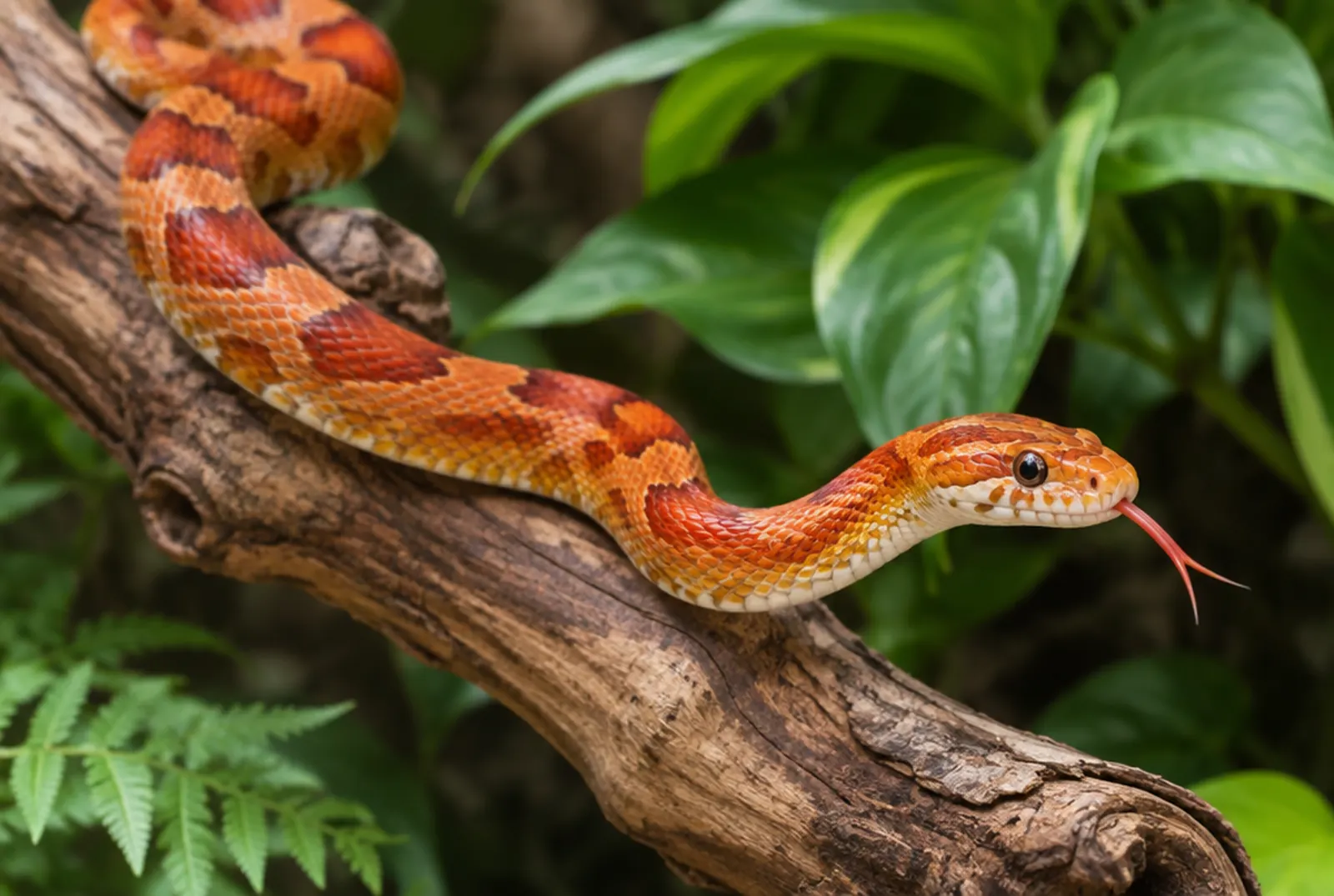
Is a corn snake right for you?
Corn snakes (Pantherophis guttatus) are native to the southeastern United States. They're slender, active, rarely defensive once settled, and come in a huge range of color morphs. They feed reliably on frozen-thawed mice and tolerate small husbandry mistakes better than most species, which is why they're so often recommended as a first snake.
Corn snakes are also expert escape artists, so a secure enclosure isn't optional.
Enclosure
| Snake | Enclosure |
|---|---|
| Hatchling | 10–20 gallon tub or terrarium |
| Juvenile | 20–40 gallons |
| Adult | 4×2×2 ft minimum |
Corn snakes are active explorers and good climbers, so give them branches and some height as well as floor space. Provide at least two hides (warm and cool), plus cover from plants and cork bark. Check every vent, lid and door gap: if a gap fits the snake's head, the snake will get out.
Heating
- Warm side surface: 85–90°F (29–32°C)
- Cool side: 72–78°F (22–26°C)
- Night: a drop into the low 70s °F (around 21–23°C) is fine
An overhead heat source (halogen bulb or deep heat projector with a guard) or a heat mat under one end works. As always, use a thermostat and check temperatures with a digital thermometer.
Lighting
UVB isn't strictly required for corn snakes, but low-level UVB with a regular 12-hour day/night cycle is increasingly recommended and can encourage natural behavior. Provide plenty of shade if you use it.
Humidity
Corn snakes do well at 40–60% humidity, which most homes provide naturally. Keep a water bowl large enough for soaking, and raise humidity a little (e.g. a damp moss hide) if you see stuck shed.
Substrate
Aspen shavings are a classic choice because they hold burrows well and suit corn snakes' moderate humidity. Coconut husk, cypress mulch and soil mixes are also good. Avoid cedar and pine, which release oils harmful to reptiles.
Feeding
Feed frozen-thawed mice, warmed to around body temperature and offered with tongs.
| Age | Prey | Frequency |
|---|---|---|
| Hatchling | Pinky mouse | Every 5–7 days |
| Juvenile | Fuzzy to hopper mouse | Every 7–10 days |
| Adult | Adult mouse (sized to the snake's widest point) | Every 10–14 days |
Prey should be no wider than the widest part of the snake's body. Don't handle for 48 hours after feeding, to avoid regurgitation.
Handling
Corn snakes are usually happy to be handled once settled. Start with short sessions a few times a week, support the body, and let the snake move through your hands. Hatchlings can be quick and jumpy, but most calm down with regular gentle handling.
Common mistakes
- Gaps and unsecured lids that lead to escapes.
- Cedar or pine bedding.
- Prey that's too large, which causes regurgitation.
- Heat without a thermostat.
- Adults kept in 20-gallon tanks long-term.
Signs of a healthy corn snake
Clear eyes (outside of shed), complete sheds, steady feeding, regular droppings and an active, tongue-flicking snake exploring at dusk. Wheezing, mucus, mouth swelling or persistent refusal to eat with weight loss need a reptile vet.
FAQ
What size tank does a corn snake need? At least 4×2×2 ft for an adult.
How often should I feed a corn snake? Hatchlings every 5–7 days, juveniles every 7–10 days, adults every 10–14 days.
Are corn snakes escape artists? Yes, so use secure, locking enclosures.