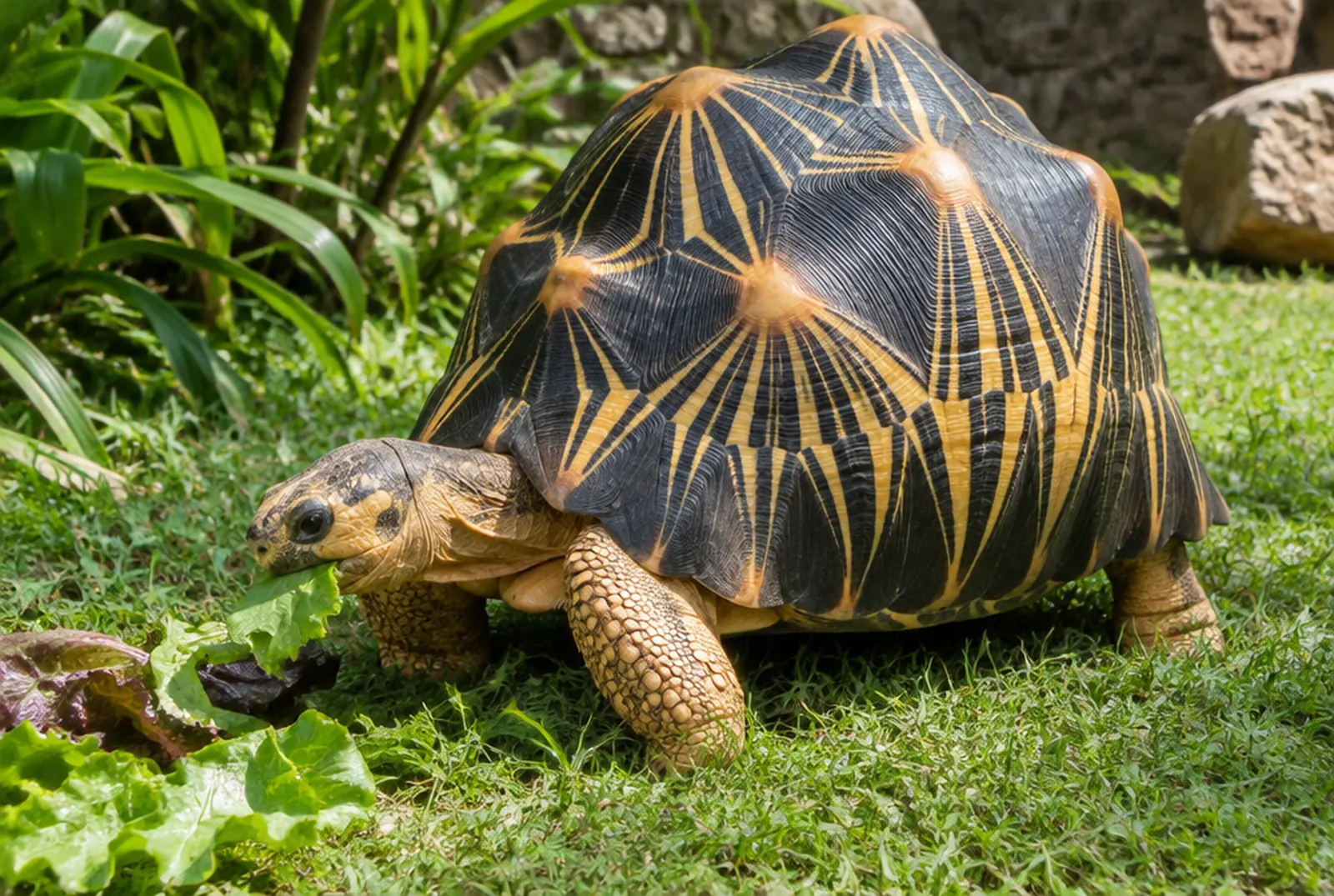
Protected species. The radiated tortoise (Astrochelys radiata) is critically endangered in the wild and listed on CITES Appendix I. Only buy legally captive-bred animals with full documentation. In the EU, commercial use normally requires an Article 10 certificate; in the US, federal permits apply to interstate sale. Rules vary, so check your local requirements before buying.
Is a radiated tortoise right for you?
Radiated tortoises come from the dry spiny forests and scrub of southern Madagascar. They're known for their stunning high-domed shells with yellow star patterns on each scute, and for being interactive and food-motivated.
They're also a multi-generation commitment: 50–100 years is realistic with good care. They need a lot of space, warm temperatures year-round and careful humidity and diet management. Captive-bred radiated tortoises are expensive, and sellers who can't provide paperwork are a major red flag for illegal trade.
Enclosure
Radiated tortoises are active grazers and need lots of floor space.
| Tortoise | Indoor enclosure |
|---|---|
| Hatchling/juvenile | Closed tortoise table or large closed enclosure, 4×2 ft or more |
| Adult (one tortoise) | 8×4 ft minimum; larger is much better |
Outdoor pens are ideal whenever the weather is warm enough, with secure walls, shade, shelter and a heated house for cool days. Indoors, a large closed-top or tall-sided enclosure holds humidity better than an open table.
Adult males can be territorial and may ram each other, so groups need plenty of space and visual barriers.
Temperature
- Warm area: about 90–95°F (32–35°C)
- Cool end: about 75°F (24°C)
- Night: keep above about 70°F (21°C)
Radiated tortoises are not cold tolerant and do not hibernate. Indoors, provide broad, even heat across the warm end (for example, mercury vapor or halogen lamps combined with UVB) rather than a tiny hot spot, all on thermostats. Avoid placing a basking lamp over a small area where a tortoise could get stuck underneath.
Lighting and UVB
Indoors, UVB is essential. Use a T5 high-output UVB tube of about 10–12% (or a quality mercury vapor UVB lamp) across the warm part of the enclosure, on a 12-hour day cycle, and replace tubes about every 12 months. Natural sunlight outdoors is best of all; never place an enclosure behind window glass, which blocks UVB.
Humidity and hydration
Humidity matters most in the first years, when it helps prevent pyramiding (lumpy, raised shell growth).
- Hatchlings and juveniles: keep humidity high, often 70–85%, with humid hides of damp moss or coconut husk, and soak them in shallow lukewarm water several times a week.
- Adults: around 50–70%, with a humid hide and regular soaks.
- Always provide a shallow water dish they can climb into easily.
Moisture-holding substrates such as coconut husk, cypress mulch or a soil mix help. Keep the surface from becoming waterlogged.
Diet
Radiated tortoises are herbivores and need a high-fiber, low-protein diet.
- Staples: grasses and grass hay, edible weeds (dandelion, plantain, clover, sow thistle), hibiscus leaves and flowers, mulberry leaves, and opuntia (prickly pear) cactus pads.
- Supplement with: dark leafy greens such as collard, mustard and turnip greens, and endive.
- Limit: fruit to an occasional small treat.
- Avoid: animal protein, dog or cat food, iceberg lettuce, and high-sugar foods.
- Calcium: dust food with calcium a few times a week and keep a cuttlebone available. Commercial grassland tortoise diets can be part of the menu.
Common mistakes
- Buying without legal paperwork.
- Dry conditions for babies, which lead to pyramiding.
- Cold temperatures or attempting hibernation.
- Too much fruit or protein.
- Indoor enclosures without proper UVB.
Signs of a healthy radiated tortoise
Smooth shell growth, clear eyes and nostrils, a strong appetite, regular droppings and urates, and active grazing in the warmth. Runny nose, bubbles, swollen eyes, soft shell, lethargy or refusing food warrant a reptile vet.
FAQ
Is it legal to own a radiated tortoise? It's CITES Appendix I protected. Legally captive-bred animals can be owned in many places, but sale and transport need specific paperwork. Check local law.
What temperature does a radiated tortoise need? Warm area 90–95°F (32–35°C), cool end ~75°F (24°C), nights above ~70°F (21°C). No hibernation.
What do radiated tortoises eat? High-fiber plants: grasses, hay, weeds, hibiscus and opuntia, with calcium and very little fruit.