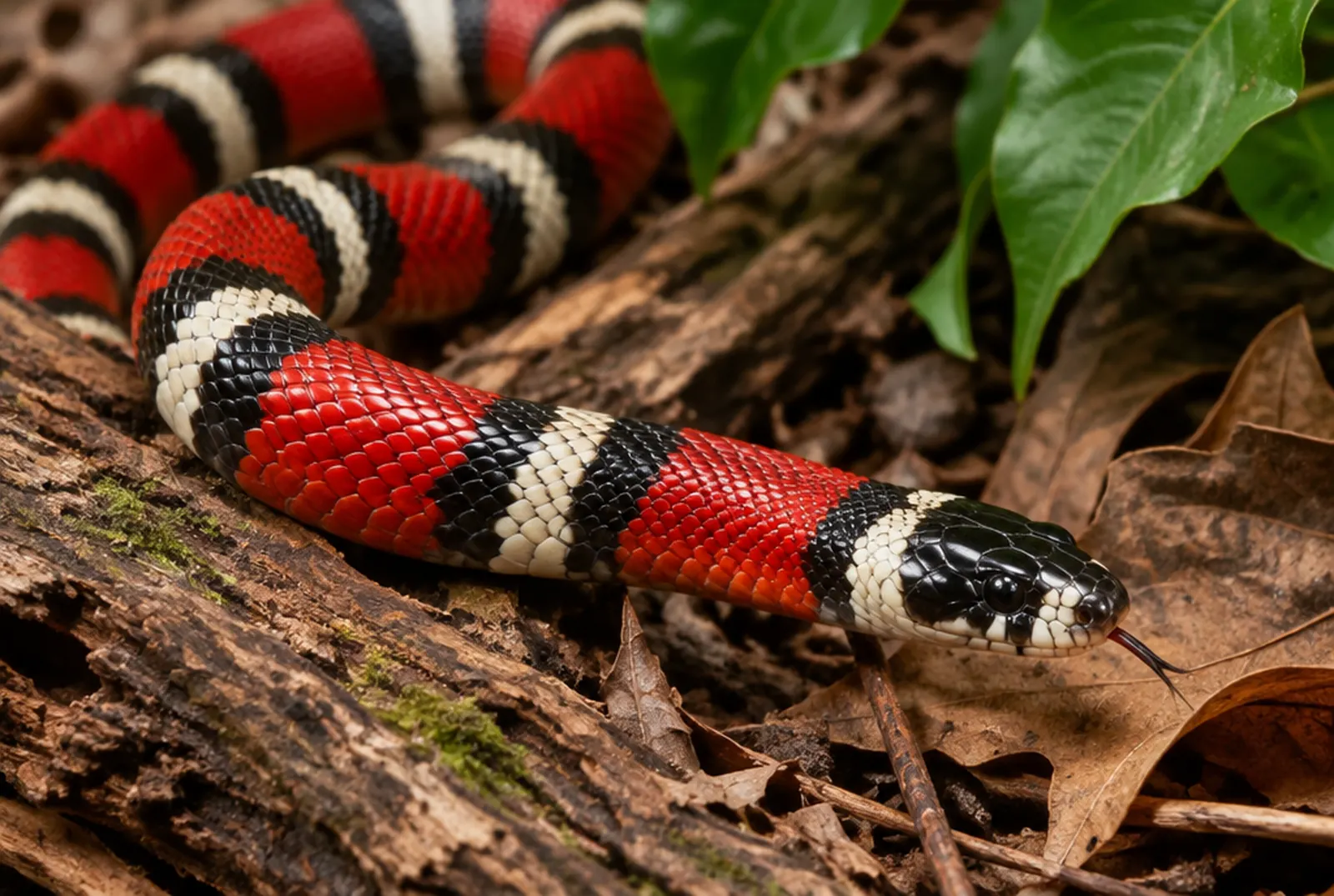
Is a milk snake right for you?
Milk snakes (Lampropeltis triangulum complex) range from southeastern Canada through the United States and Central America into northern South America. Pet-trade favourites include Pueblan, Honduran, Nelson's and Sinaloan milk snakes, all bred in huge numbers in captivity and famous for their red, black and white or yellow bands.
They're hardy, non-venomous and reliable feeders. Hatchlings can be jumpy (and will musk when stressed), but most calm down with regular gentle handling. Care varies a little between subspecies, so ask your breeder which one you have.
Enclosure
| Snake | Enclosure |
|---|---|
| Hatchling | 10–20 gallon tub or terrarium |
| Small adults (e.g. Pueblan, ~3 ft) | 36×18×18 in minimum |
| Most adults | 4×2×2 ft |
| Large adults (e.g. Honduran, 4–5 ft+) | 4×2×2 ft minimum; larger is better |
Milk snakes are escape artists. Use a lockable enclosure and check every vent and gap. Provide at least two snug hides (warm and cool), plus branches and cover; they'll climb when given the chance.
Never house milk snakes together. They're ophiophagous (snake-eating) and cannibalism is a real risk.
Heating
- Warm side / basking surface: 85–90°F (29–32°C)
- Cool side: 70–78°F (21–26°C)
- Night: a drop into the low 70s °F (21–23°C) is fine
Use an overhead heat source (halogen bulb or deep heat projector with a guard) or a heat mat under the warm end, always on a thermostat.
Lighting
UVB isn't strictly required, but low-level UVB and a regular light cycle can benefit milk snakes. Many keepers also follow a seasonal photoperiod (longer days in summer, shorter in winter), which mirrors their temperate natural range.
Humidity
Keep humidity around 40–60%, rising to around 70% when the snake is about to shed. A humid hide with damp sphagnum moss helps with clean sheds.
Substrate
Aspen shavings are a classic choice and hold burrows well. Coconut husk and soil mixes also work. Avoid cedar and pine.
Feeding
Feed frozen-thawed mice, warmed and offered with tongs. Prey should be no wider than the widest part of the snake's body.
| Age | Prey | Frequency |
|---|---|---|
| Hatchling | Pinky mouse | Every 5–7 days |
| Juvenile | Fuzzy to hopper mouse | Every 7–10 days |
| Adult | Adult mouse (or small rat for large subspecies) | Every 10–14 days |
Some hatchlings are reluctant to take frozen-thawed food at first. Leaving the prey in a hide overnight, or scenting it, can help. Avoid handling for 48 hours after a meal.
Handling
Start with short sessions. Hatchlings may thrash, musk or bite out of fear; calm, regular handling usually settles them. Support the body and let the snake move through your hands.
Common mistakes
- Housing two milk snakes together.
- Gaps and unsecured lids that lead to escapes.
- Cedar or pine bedding.
- Prey that's too large.
- Heat without a thermostat.
Signs of a healthy milk snake
Clear eyes outside of shed, complete sheds, steady feeding, regular droppings and an active, tongue-flicking snake at dusk. Wheezing, mucus, mouth swelling or prolonged food refusal with weight loss warrant a reptile vet.
FAQ
What size enclosure does a milk snake need? Most adults: 4×2×2 ft. Small subspecies: 36×18×18 in minimum.
Can milk snakes live together? No. They eat other snakes; always house alone.
What temperature does a milk snake need? Warm side 85–90°F (29–32°C), cool side 70–78°F (21–26°C).