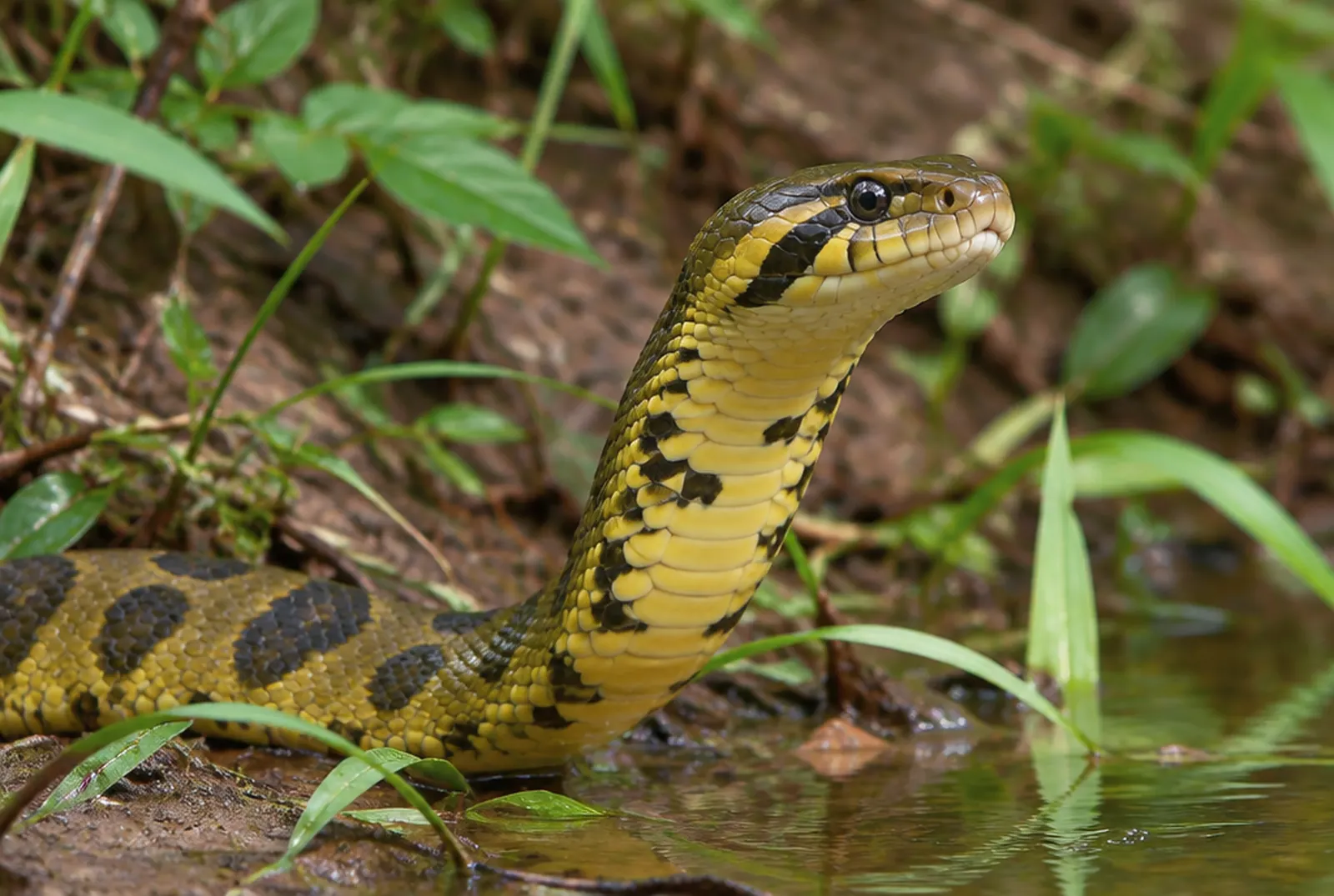
Mildly venomous. False water cobras are rear-fanged colubrids. Their venom isn't usually medically serious for healthy adults, but a bite where the snake holds on and chews can cause significant pain and swelling, and allergic reactions are possible. Some places regulate rear-fanged species, so check your local laws. Seek medical advice after any bite that causes more than minor symptoms.
Is a false water cobra right for you?
The false water cobra (Hydrodynastes gigas) is a large, semi-aquatic snake from the wetlands and riversides of South America, including Brazil, Paraguay, Bolivia and Argentina. It isn't a true cobra, but it flattens its neck into a hood-like display when threatened, which is where the name comes from.
"Falsies" are active, alert and very food-motivated, which makes them engaging to watch. They're best suited to keepers who are already confident with active, medium-to-large colubrids and are comfortable with hooks and tongs.
Enclosure
| Snake | Enclosure |
|---|---|
| Hatchling | Secure ventilated tub or 20–40 gallons |
| Juvenile | 4×2×2 ft |
| Adult | 8×3×3 ft minimum (bigger for large females) |
False water cobras are fast, strong and curious, so use a lockable, front-opening enclosure. Provide:
- A large water bowl or tub big enough for the snake to fully submerge (place it toward the cool side).
- Several hides, plenty of cover, and sturdy branches; they'll climb as well as swim.
Heating and lighting
- Basking surface: around 88–90°F (31–32°C)
- Cool side: around 75–78°F (24–26°C)
- Night: a few degrees cooler is fine
Use halogen flood bulbs or radiant heat panels with guards, controlled by a thermostat. Low-level UVB and a 12-hour day/night light cycle are beneficial for this diurnal snake.
Humidity and substrate
Keep humidity around 50–70%. A deep, moisture-holding substrate (cypress mulch, coconut husk or a soil mix) plus the large water bowl usually does the job. Raise it slightly before a shed.
False water cobras are notoriously messy and defecate often, frequently in their water. Expect to spot-clean substrate and change water very regularly.
Feeding
False water cobras are enthusiastic eaters with a strong feeding response.
- Staple: frozen-thawed rodents, sized to the snake's widest point.
- Variety: some keepers offer occasional fish, frogs or chicks. Avoid relying on fish known to contain thiaminase (such as smelt or goldfish), which can cause vitamin B1 deficiency if fed frequently.
| Snake | Frequency |
|---|---|
| Hatchling/juvenile | Every 5–7 days |
| Adult | Every 10–14 days, adjusting to body condition |
They're prone to obesity. Watch body condition rather than sticking rigidly to a schedule.
Handling and safety
- Use feeding tongs every time; falsies often mistake movement for food.
- Hook-train the snake: touch it with a snake hook before handling so it knows it isn't feeding time.
- Never handle after touching prey, and wash hands before handling.
- If bitten and the snake holds on, gently but firmly unhook it rather than pulling away, wash the area and monitor symptoms.
Many false water cobras become calm and tolerant with regular, confident handling, but they're always quick and alert.
Common mistakes
- Underestimating their speed and feeding response.
- Water bowls too small to soak in.
- Overfeeding leading to obesity.
- Undersized enclosures for an active adult.
- Handling without tongs or a hook.
Signs of a healthy false water cobra
Alert and active by day, regular feeding, complete sheds, clean nostrils and a firm, toned body. Wheezing, mucus, mouth swelling, blisters or persistent regurgitation warrant a reptile vet.
FAQ
Are false water cobras venomous? Yes: rear-fanged and mildly venomous. Not usually dangerous to healthy adults, but bites can cause pain and swelling, so treat them with respect.
What size enclosure does a false water cobra need? At least 8×3×3 ft for an adult.
What humidity do false water cobras need? Around 50–70%, with a soaking-sized water bowl.